
Family violence should never be condoned. A family is a social construct where one should feel safe and should not be associated with a cause of fear.
Unfortunately, family violence does occur. In this article, we seek to define what family violence is, and what you can do to protect yourself if you are a victim of family violence.
Who Classifies As “Family”
As is in the term, family violence would have to be committed by a family member against another family member. A family member is defined in the Women’s Charter 1961 as being a person’s:
- Spouse or former spouse
- Child (including an adopted child or step-child)
- Parents or parents-in-law
- Siblings
Any other relative or an incapacitated person may also be, in the circumstances, held by the Family Courts as being a family member.
Steps To Take When There Is Family Violence
When family violence has been committed, an application for the appropriate Order should be made at the Family Courts.
The types of Orders that can be applied for are as follows:
Personal Protection Order (“PPO”)
This Order directs that the perpetrating family member is not allowed to inflict family violence on the family member whom the PPO is being sought for.
Expedited Order (“EO”)
This is a temporary Order that lasts for 28 days and is granted where there is imminent danger of family violence being committed. Please note that a PPO must be applied for first, before applying for an EO.
Domestic Exclusion Order (“DEO”)
This Order excludes or restricts the perpetrating family member from entering the victim’s home (or part thereof). Please note that a PPO must be applied for first, before applying for a DEO.
Typically, the victim of family violence will be the one applying for any of the above Orders. However, if the victim is under 21 years of age or is an incapacitated person, it is important to note that the application can also be made by the guardian, relative or person responsible for the care of the victim.
PPO Application Process
The process for applying for a PPO is outlined as follows:
Making the Court Application (1 to 3 Weeks)
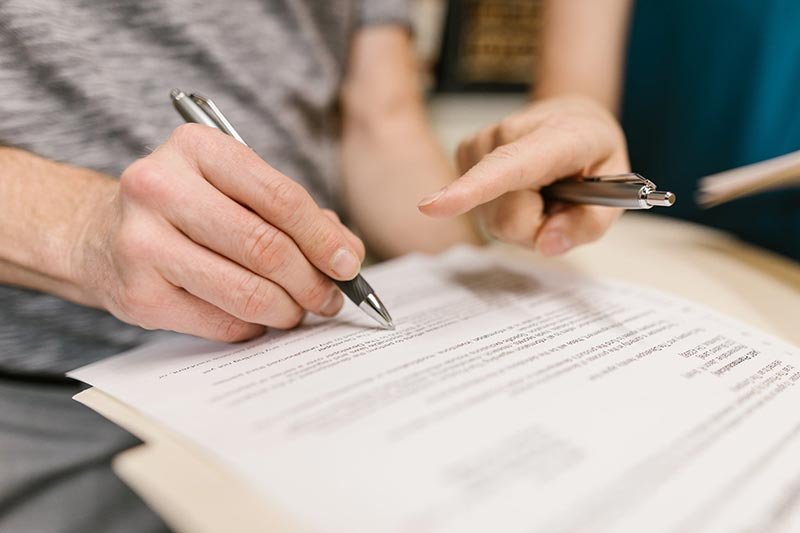
- The PPO Application needs to be completed and filed at the Protection Order Services Counter of the Family Courts.
- The applicant, or Complainant, will then be brought before a Judge to swear or affirm their complaint.
- A date will be provided for the Complainant to return to the Family Courts for the Court Mention.
Court Summons (1 to 2 Weeks)
The Court Summons will be served by the Family Courts on the perpetrating family member.
Court Mentions.
- If the perpetrating family member does not appear for the Court Mention, a warrant for their arrest will be issued.
- If the perpetrating family member is present, the Judge will direct for the Parties to attend counselling and/or mediation.
If the matter is not settled, the Family Courts will fix the matter for trial and thereafter direct the Parties to exchange their evidence on the incident(s) of family violence.
PPO Trial
- At trial, the Parties will be examined and cross-examined on the incident(s) of family violence.
- After trial, the Family Courts will decide whether or not to grant the PPO.
Engaging A Lawyer
Dealing with situations of family violence is often stressful and the victim of family violence may sometimes be unable to face the perpetrating family member.
It is recommended that you engage a lawyer when making a PPO application, whether for yourself or another family member. As with all other legal proceedings, a lawyer would be best able to advise and guide you during the entire process.
The right lawyer would assist greatly in facilitating the PPO proceedings. An experienced lawyer can best present the facts of your case and establish the incident(s) of family violence to the Family Courts, demonstrating why the PPO should be granted.
Should you or someone you know be experiencing family violence, here are some key hotline numbers to contact:
- Singapore Police Force – 999
- Singapore Civil Defence Force (SCDF) Emergency Medical Services – 995
- Ministry of Social and Family Development (MSF) Consolidated Hotline – 1800 111 2222
- AWARE Helpline – 1800 777 5555